Skip to content



Drafts around exterior doors come from worn weatherstripping, damaged door sweeps, misaligned hinges, out-of-square settled framing, or uninsulated gaps between the door frame and the rough opening in the wall. Even when a door appears fully closed, air leaks can allow cold drafts into Long Island and Westchester homes. Some issues can be resolved with minor hardware adjustments, while structural warping or framing settlement requires professional replacement.
Key Takeaways
- Door drafts can develop around the weatherstripping, threshold, frame, or hardware.
- A closed door can still leak air if it isn’t pressing evenly against its seals.
- Checking the source of a draft can determine whether a repair is enough or replacement is worth considering.


Why a Closed Door Can Still Leak Cold Air (The Mechanics of a Draft)
Just because a door is closed doesn’t mean it’s sealed. The hinges, latch, weatherstripping, and frame all need to work together to maintain proper contact. If the hinges loosen or the door begins to sag, it may no longer sit evenly in the opening. A misaligned latch can create similar problems by preventing the door from pressing firmly against its seals.
Weatherstripping wears out over time and can flatten, crack, or start to peel away. If the frame has shifted or is no longer square, replacing the seals alone may not solve the problem. Air can also enter through gaps between the door frame and surrounding wall, making it feel like the cold is coming from behind the interior trim.
Drafts can also develop at the bottom corners of the door, where the weatherstripping, door sweep, and threshold meet. Worn seals, missing corner pads, or uneven contact can leave small openings that become particularly noticeable during windy Long Island and Westchester winters.
Not every cold spot near an exterior door is caused by a draft. Older doors with limited insulation or metal components can transfer outdoor temperatures into the home, making the surrounding area feel colder even when the seals are intact. If you don’t feel moving air but the door surface is noticeably cold, insulation and thermal performance may be part of the problem.
The Master Contractor’s 5-Step Door Inspection Routine
Before replacing any parts, find out where the cold air is entering. These five checks can help identify common sealing and alignment problems without taking the door apart.

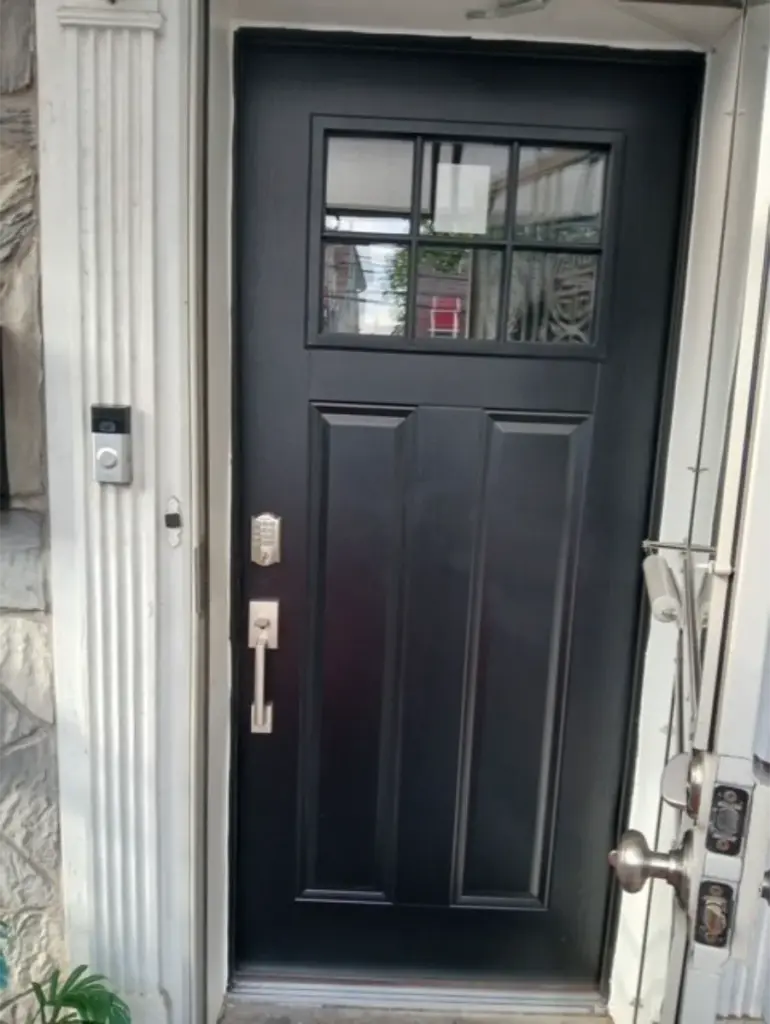
1. Check the Latch and Door Alignment
Close and latch the door, then gently push and pull near the handle. If you feel excessive movement, hear rattling, see daylight, or notice uneven gaps around the frame, the door may not be properly aligned or making adequate contact with its seals.
2. Try the Paper Test
Close and latch the door on a strip of paper, then gently pull it out. If the paper slides out with little resistance, the weatherstripping may not be sealing properly. Repeat the test along the top and sides to compare how firmly the seals make contact.
It’s a simple way to check for uneven sealing, although it won’t measure the actual amount of air leaking through the door.
3. Inspect the Hinges and Hardware
Look for loose hinge screws, sagging, a misaligned strike plate, or areas where the door rubs against the frame. Check whether the frame is plumb, square, or twisted, especially if the house has settled. Tightening hardware or making adjustments may correct minor alignment problems, but damaged screw holes or significant frame movement may require professional repairs.
4. Examine the Door Sweep and Threshold
Check for torn rubber, flattened seals, missing corner pads, or gaps beneath the door. If your threshold is adjustable, follow the manufacturer’s instructions. Raising it too high can damage the sweep or make the door difficult to close.
5. Check Around the Interior Door Trim
Run your hand near the interior casing where the door frame meets the wall. If you feel cold air here, gaps between the door frame and rough opening may be responsible. Identifying the source may require removing trim to inspect the concealed space. Caulking the visible molding alone may not stop the leak if the underlying opening wasn’t properly sealed.
Checking Drafts on Patio Doors, French Doors & Storm Doors
Patio, French, and storm doors have different sealing points than standard entry doors. Knowing where to look can help narrow down the source of a draft.
Sliding Patio Doors
Sliding patio doors need properly aligned panels, rollers, and weatherstripping to maintain a good seal. Dirt in the tracks, worn rollers, or a panel that’s out of alignment can prevent the door from closing tightly. Check the seals where the panels meet, the bottom track, and the locking mechanism.
French, Hinged Patio, and Double Entry Doors
Doors with two hinged panels have an additional sealing point where the panels meet. If the weatherstripping along the center astragal is worn or the inactive door isn’t secured properly, cold air can pass through. Check that the top and bottom locking points engage correctly and that both doors close evenly.
Storm and Steel Security Doors
Storm and steel security doors add another barrier against wind and weather, but they won’t compensate for a poorly sealed main entry door. Check the bottom expander and sweep, perimeter seals, glass-panel fit, mounting rails, latch, and closer adjustment. The primary exterior door still needs to maintain its own effective seal.
3 Common DIY Draft Fixes That Can Damage Your Door
Some simple repairs can help stop drafts, but using the wrong materials or making the wrong adjustments can create new problems or cause premature wear.
1. Installing Weatherstripping That’s Too Thick
Thicker foam weatherstripping isn’t always better. Too much material can prevent the door from latching easily, stress the hinges, or push the door out of alignment. If the door takes excessive force to close or the deadbolt won’t turn smoothly, the weatherstripping may be too thick or poorly positioned.
2. Raising the Threshold Too High
Some exterior doors have adjustable thresholds that help maintain contact with the bottom sweep. Raising the threshold can seal small gaps, but turning the adjustment screws too far will cause the door to drag. That extra friction can tear the bottom sweep, make the door difficult to operate, and put unnecessary stress on the door frame.
3. Caulking Moving Joints or Drainage Openings
Caulk belongs at appropriate stationary joints, not where the door or its seals need to move. Applying it to moving parts can interfere with operation, while blocking drainage openings may trap water inside the door assembly. Use compatible weatherstripping where movement is required and keep the designed drainage paths open.
Repair vs. Full Replacement: How to Triage Your Drafty Door
A draft doesn’t automatically mean you need a new door. If the door and frame are still in good condition, replacing worn seals, tightening hardware, or correcting minor alignment problems may be enough.
A properly installed exterior door should close, latch, and lock smoothly while maintaining consistent contact with its weatherstripping. If adjustments cannot restore that fit, the door or surrounding frame may need a closer evaluation.

| Problem | Possible Solution |
|---|---|
| Loose hinges or latch | Tighten or adjust compatible hardware to improve alignment and seal contact. |
| Worn weatherstripping or door sweep | Replace damaged seals with components designed for the door. |
| Uneven threshold contact | Adjust the threshold according to the manufacturer’s instructions or replace damaged components. |
| Air leaking behind interior trim | Inspect the rough opening and seal gaps using appropriate air-sealing materials. |
| Warped door, rotted frame, or persistent misalignment | Have the door assembly evaluated to determine whether repair or replacement makes more sense. |
Water damage is another warning sign worth checking, especially around the bottom of the frame and threshold. Soft wood, peeling paint, discoloration, or a musty smell can indicate moisture has been entering around the door. Replacing a worn sweep may reduce the draft, but it won’t address damaged framing or the source of the water intrusion. Those conditions should be evaluated before deciding whether to repair or replace the door.
If you’ve tried the basic repairs and the door still leaks air, there may be damage that isn’t visible from the surface. Warping, rotted framing, and persistent alignment problems are among the signs that a door may need replacement rather than repair, particularly when they prevent it from closing or sealing properly.
How Modern Replacement Doors Help Reduce Drafts

If repairs don’t resolve the problem, a properly fitted replacement door may provide a better long-term solution. Modern entry doors use insulated cores, improved weatherstripping, and threshold designs that help reduce air leakage.
Manufacturers such as ProVia and Andersen offer exterior doors designed for comfort and weather protection. ProVia’s Signet fiberglass and Legacy steel entry doors, for example, feature polyurethane foam insulation, perimeter weatherstripping, and bottom sweeps designed to seal against the threshold. Their Z-AC threshold systems also have auto-adjusting components that help maintain a consistent seal.
Even a well-insulated door can leak air if it isn’t installed correctly. The new door must fit squarely in the opening, with the frame secured and surrounding gaps properly sealed. If you’re dealing with recurring drafts or a deteriorating frame, exterior door replacement may be more practical than continuing to make repairs.
Stop Drafts This Season with Unified Home Remodeling
If your exterior door continues letting in cold air despite repairs, it may be time to consider a replacement. Unified Home Remodeling is a family-owned exterior remodeling company serving Long Island and Westchester homeowners since 1989. We install entry doors from manufacturers including ProVia and Andersen, with options designed to improve comfort, weather protection, and curb appeal.
Visit our showrooms in Baldwin, Patchogue, or Scarsdale to compare door styles and features in person. Call 888-631-2131 or request a free estimate online to discuss your options.
Frequently Asked Questions About Drafty Exterior Doors
Can a door be drafty even if you can’t see any gaps?
Yes. Small openings around weatherstripping, thresholds, or the door frame may allow air through without being visible. Air can also enter through poorly sealed spaces between the frame and surrounding wall.
Why does my front door feel draftier when it’s windy?
Wind creates pressure differences between the inside and outside of your home, pushing air through gaps around the door. Loose latches, worn weatherstripping, and poorly sealed thresholds can make these drafts more noticeable.
Can replacing weatherstripping stop a drafty exterior door?
Yes, if worn or damaged weatherstripping is causing the air leak. Replacement seals need to match the door’s design and make proper contact when it’s closed. If the door is misaligned or the frame has gaps, new weatherstripping alone may not solve the problem.
Does adding a storm door help reduce drafts?
A properly fitted storm door can provide an additional barrier against wind and outdoor conditions. It won’t correct damaged weatherstripping, poor alignment, or air leaks in the primary entry door.
Will replacing my exterior door lower my heating bills?
A properly installed, well-sealed replacement door may reduce heat loss if the existing door has significant air leaks or poor insulation. Actual savings depend on the door’s performance, installation, and other sources of heat loss throughout the home.